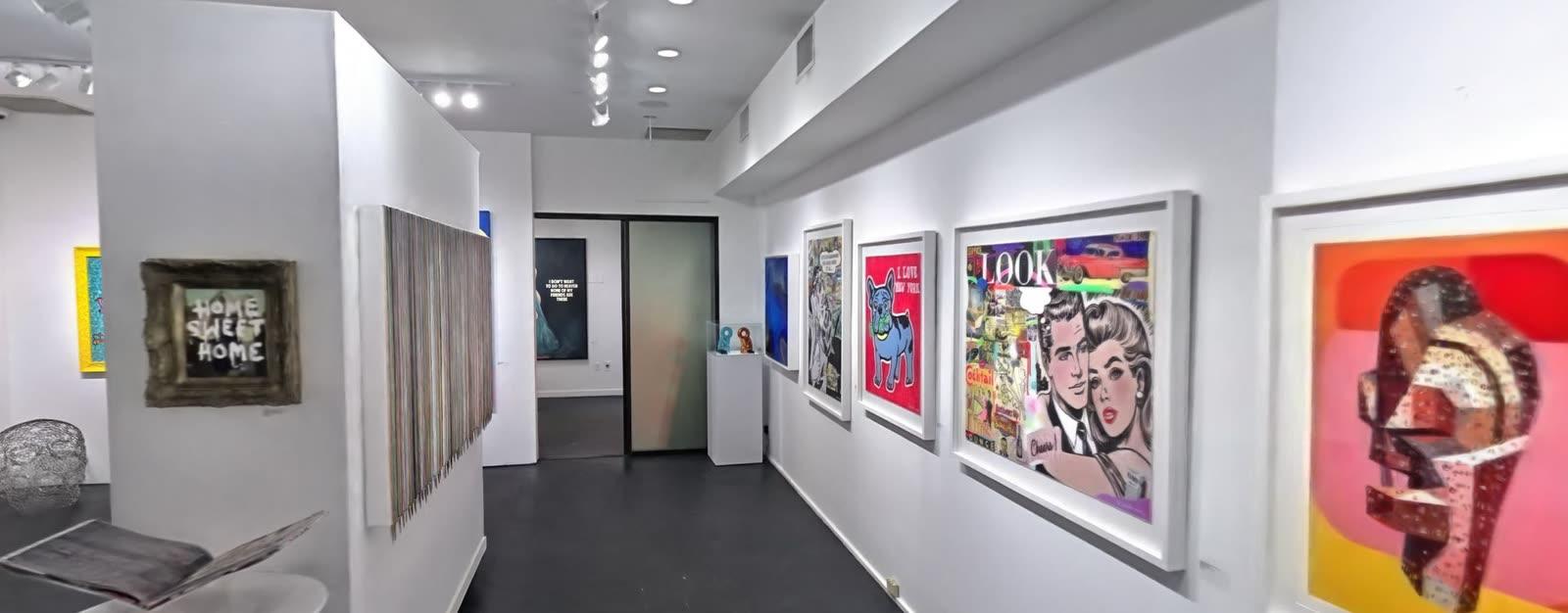
The Gallery and Every Work in It - A 3D Scan of the Space, Then a Phone Scan of Each Artwork
First the gallery is scanned as a Gaussian splat and a floorplan is drawn over it. Then each work is captured with a phone, for viewing and as a record of its condition. A marker on the plan opens the piece that hangs there.

A Hang Lasts a Few Weeks
A gallery is a space that keeps changing. Works arrive, hang for the length of a show, sell, and leave. What the room looked like on a given day, and what was on which wall, is usually preserved in a handful of installation photographs.
Those photographs answer one question: what did it look like from here? They do not let a collector in another city walk the room, stand in front of a piece, or see how its surface catches the light. They say nothing about where a work hung in relation to the ones around it. And they are not a record of the condition a work was in when it arrived or when it left.
Laan Labs documented DTR Modern Galleries in SoHo, New York, to keep all of that: the space as it was hung, and each work in it.
The Approach: Space First, Then the Works
The work is done in a fixed order, because each step builds on the one before.
| Step | Capture | What it gives |
|---|---|---|
| 1. Scan the space | One pass with a 3D scanner | A Gaussian splat of the whole gallery that can be walked through |
| 2. Draw the floorplan | Traced over the scan | A dimensioned plan, and a place to put each work |
| 3. Scan each work | An iPhone, one work at a time | A 3D model for viewing and a photo set as a condition record |
| 4. Link them | Markers on the plan | One step from the room to a work, and back |
Step 1: Scan the Space as a Splat
The gallery was scanned in a single pass and reconstructed as one Gaussian splat. In a browser you walk in from the street door and down the length of the room, past every wall, at the scale of the room itself.
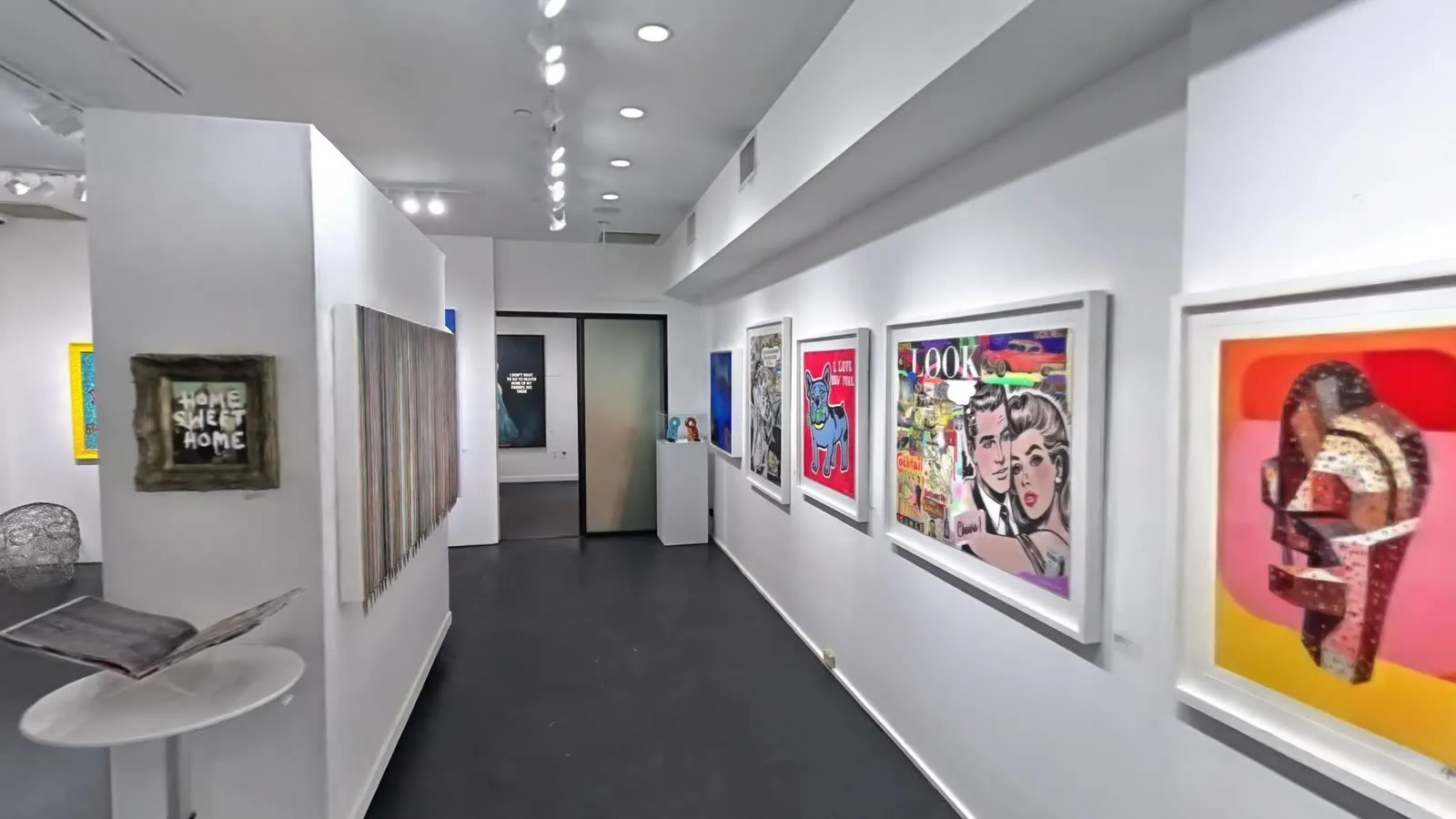
The main room, as seen in the scan
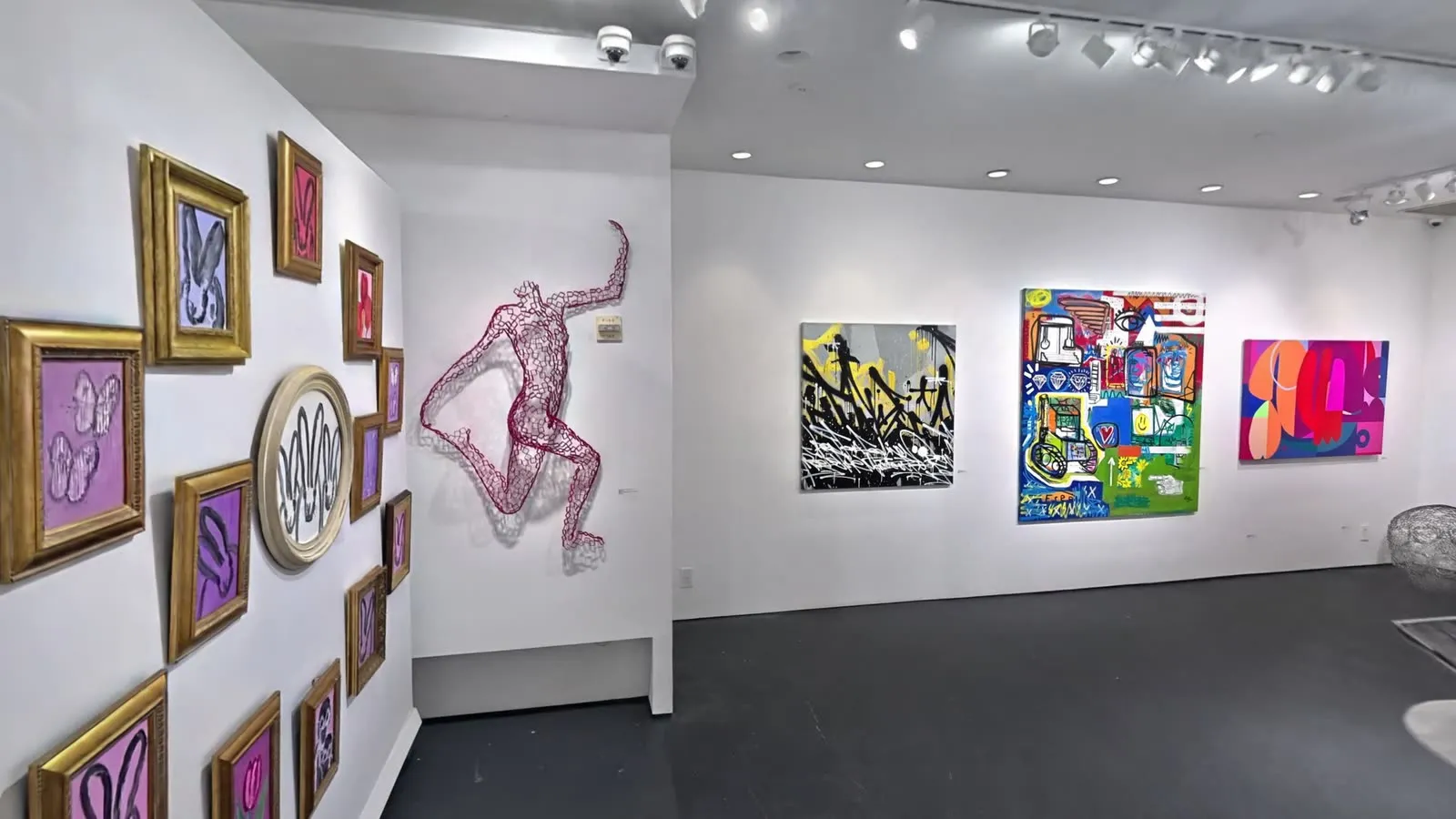
A salon-style wall and a wire figure
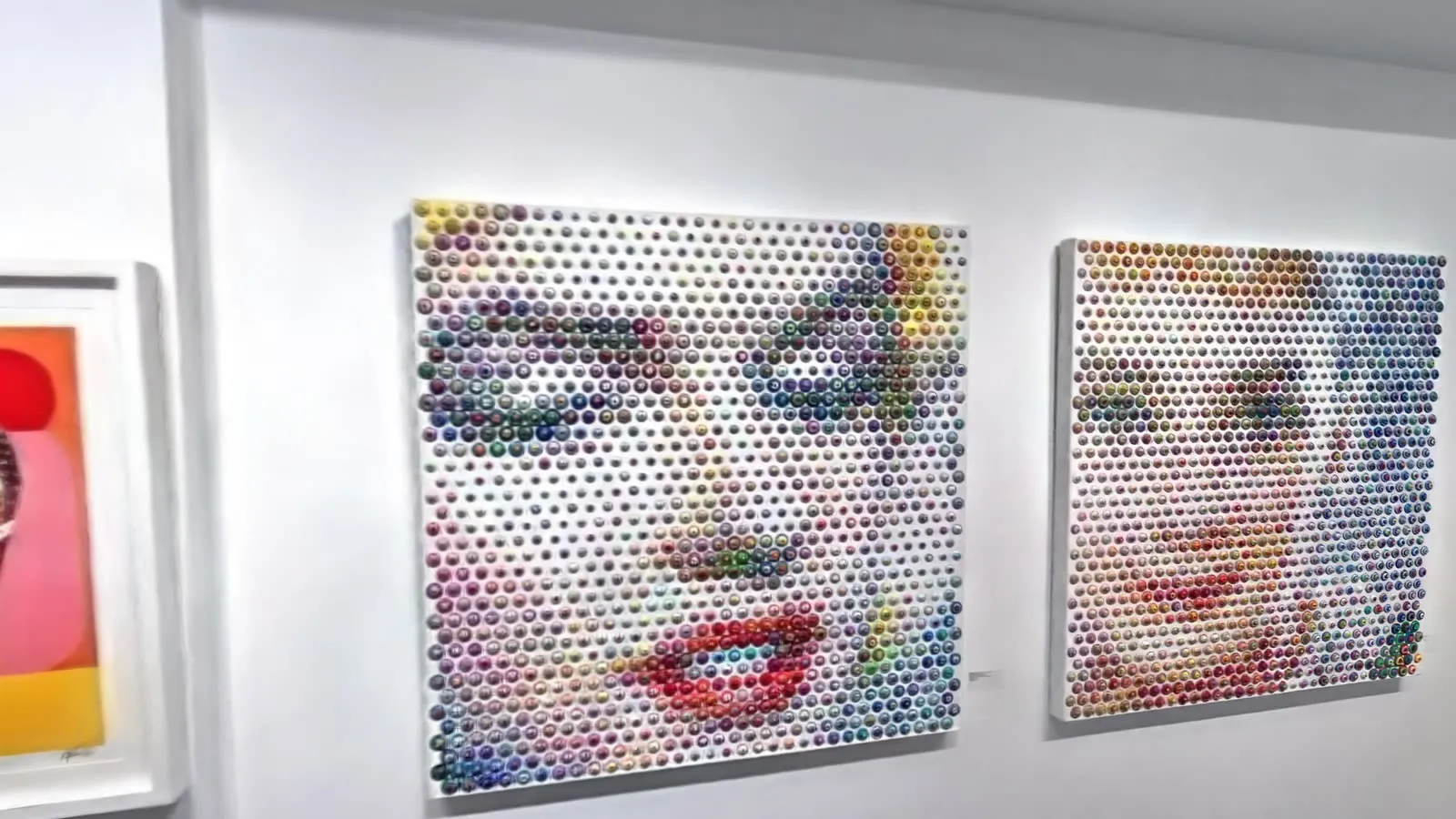
Two works side by side
The scene is a record of the hang. Which works shared a wall, how far apart they were, what a visitor saw first on entering: all of it can be revisited after the show has come down.
Step 2: Draw the Floorplan over the Scan
A floorplan was traced over a top-down view of the scan. The gallery measures 121 square metres, and the plan carries its dimensions. Because it is drawn on the scan, the plan and the 3D scene share one coordinate frame, so a point on the plan is a place in the room.
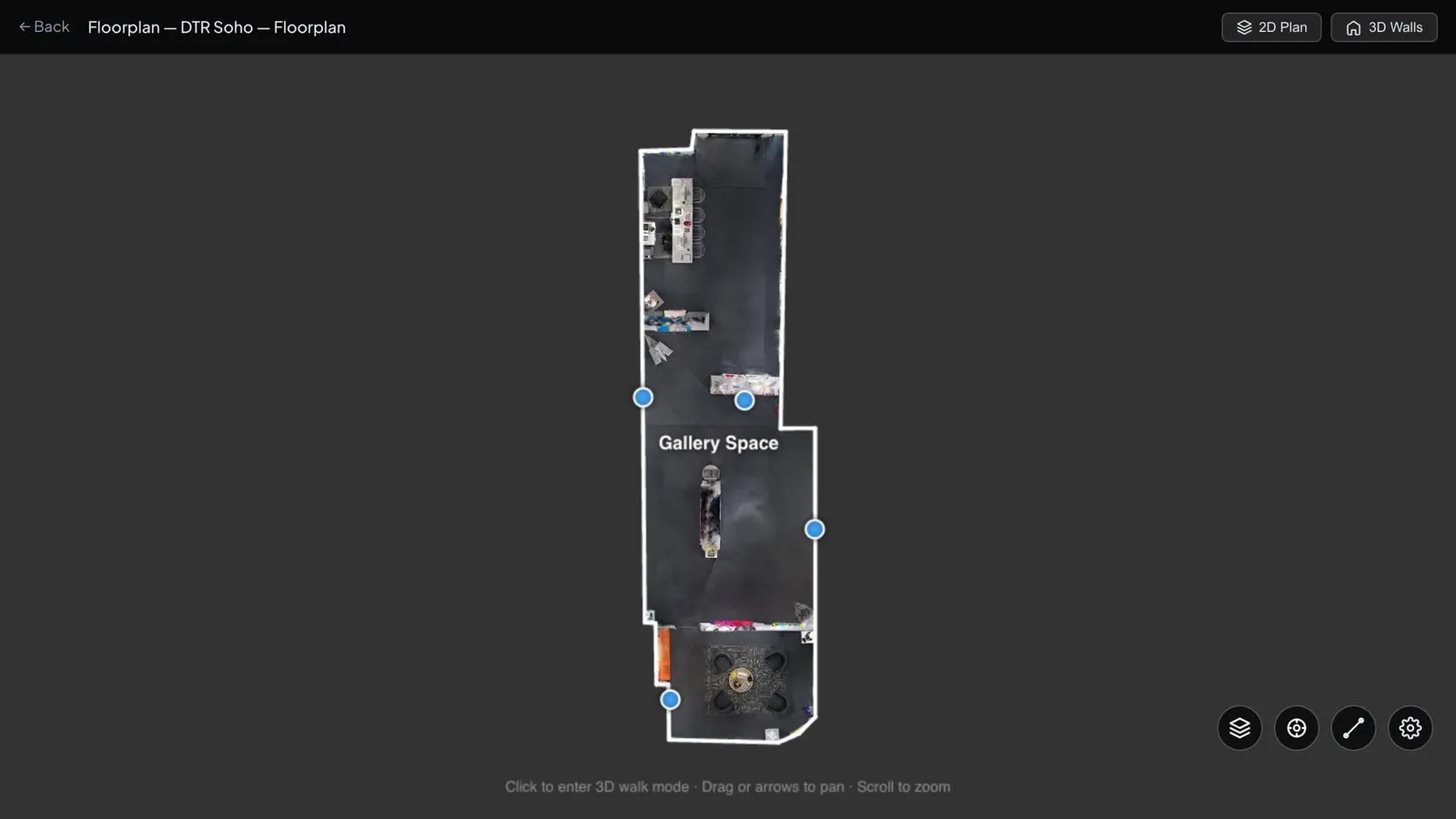
The floorplan over the scan, with four markers
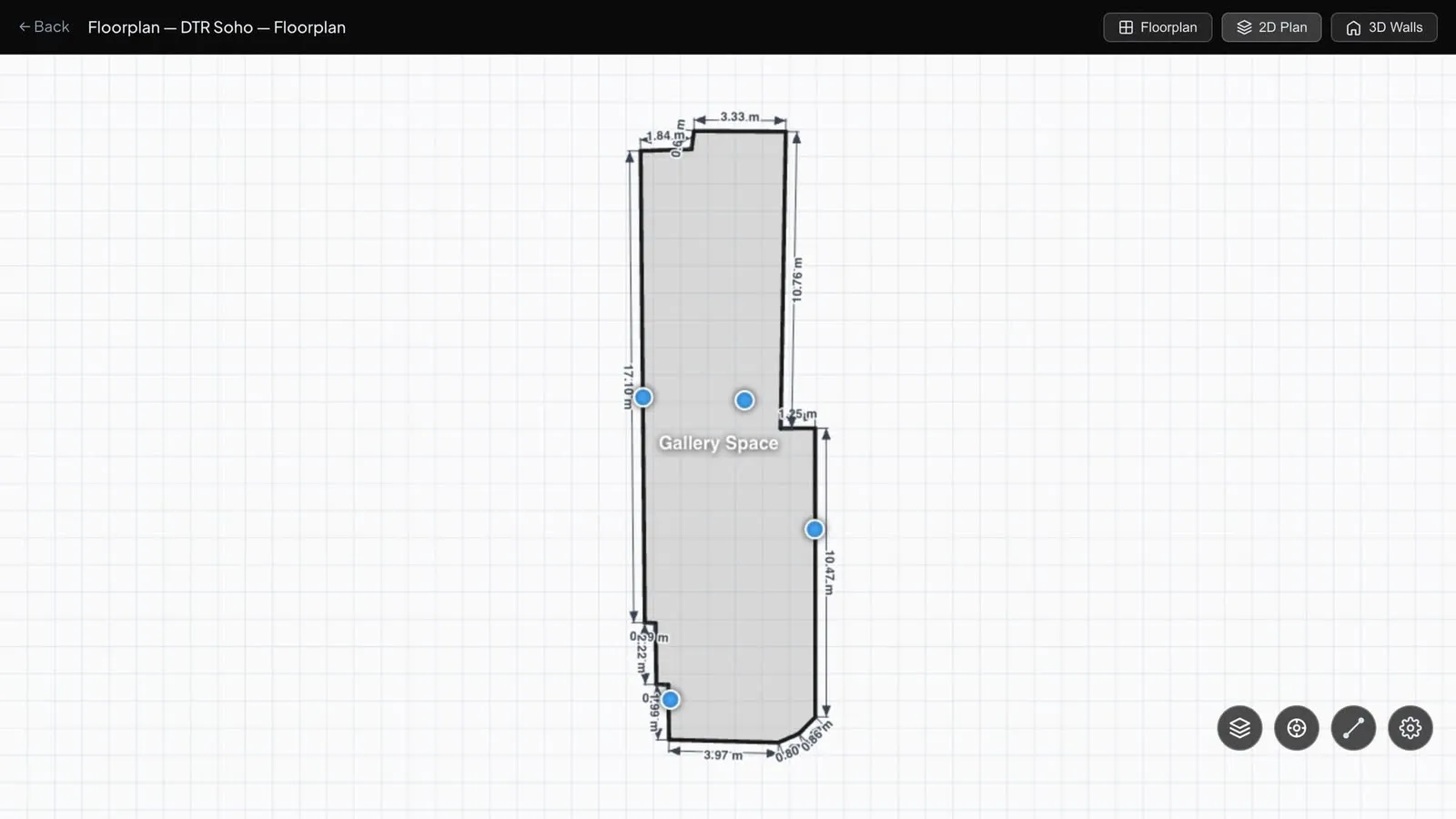
The same plan as a dimensioned drawing
Step 3: Scan Each Work with a Phone
With the room on record, each work was captured on its own with an iPhone, in the gallery, where it hangs. A phone capture produces two things, and they serve different purposes.
| Work | Capture |
|---|---|
| Keith Haring, Growing Plate No. 1 | 3D model |
| Hunt Slonem, Bunny Series | 3D model |
| Gavin Rain, Marilyn Monroe | 3D model, and a set of 39 photographs |
| Clarence James, World Cup | 3D model |
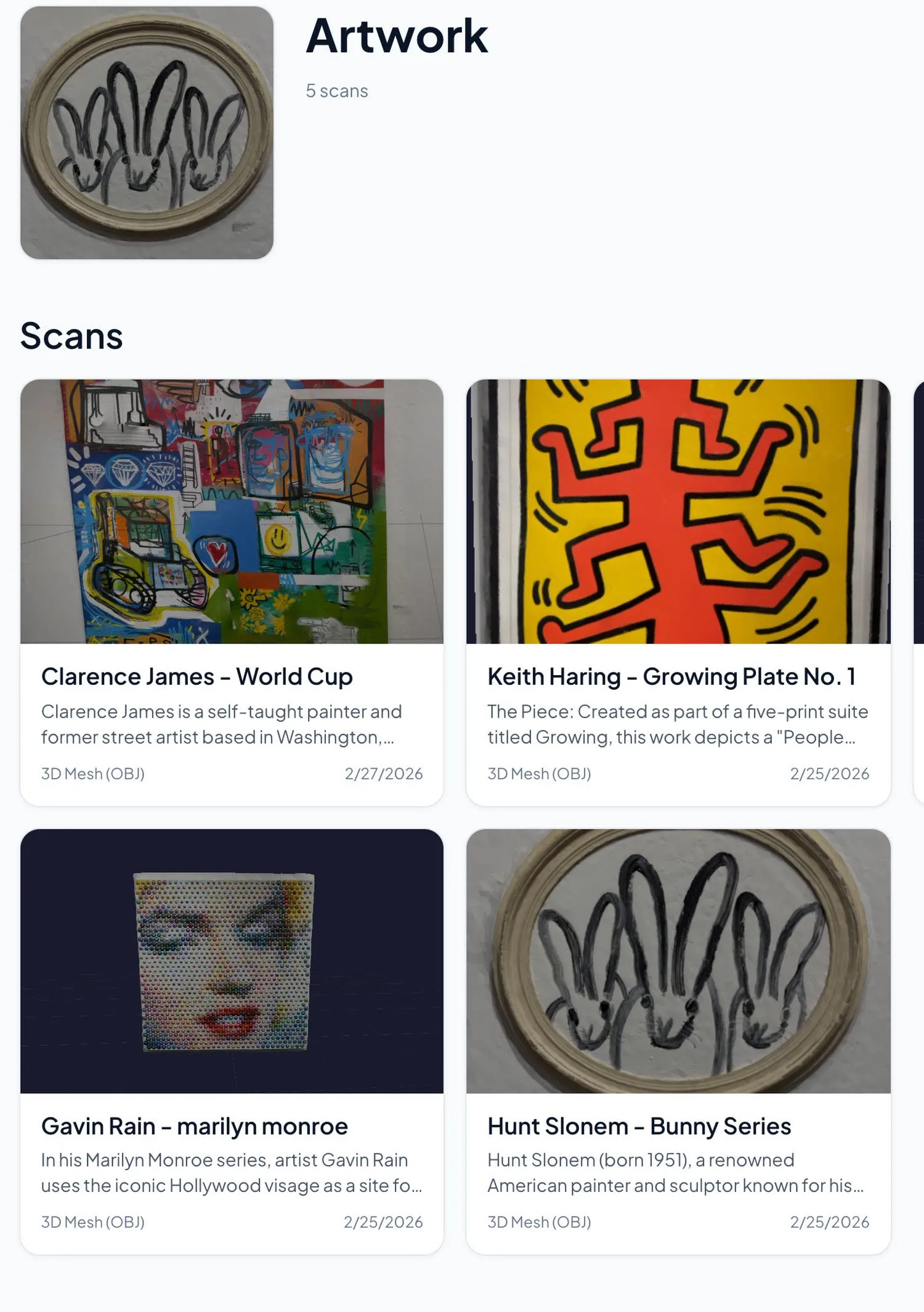
The works captured so far
For Viewing: a 3D Model
The first result is a textured 3D model of the work, a few megabytes in size, that opens in a browser and can be turned in the hand.
The surface is part of the work. Gavin Rain's portrait is built from concentric dots of paint, each one raised from the panel. A flat photograph shows the face. The 3D model shows that the face is made of objects.
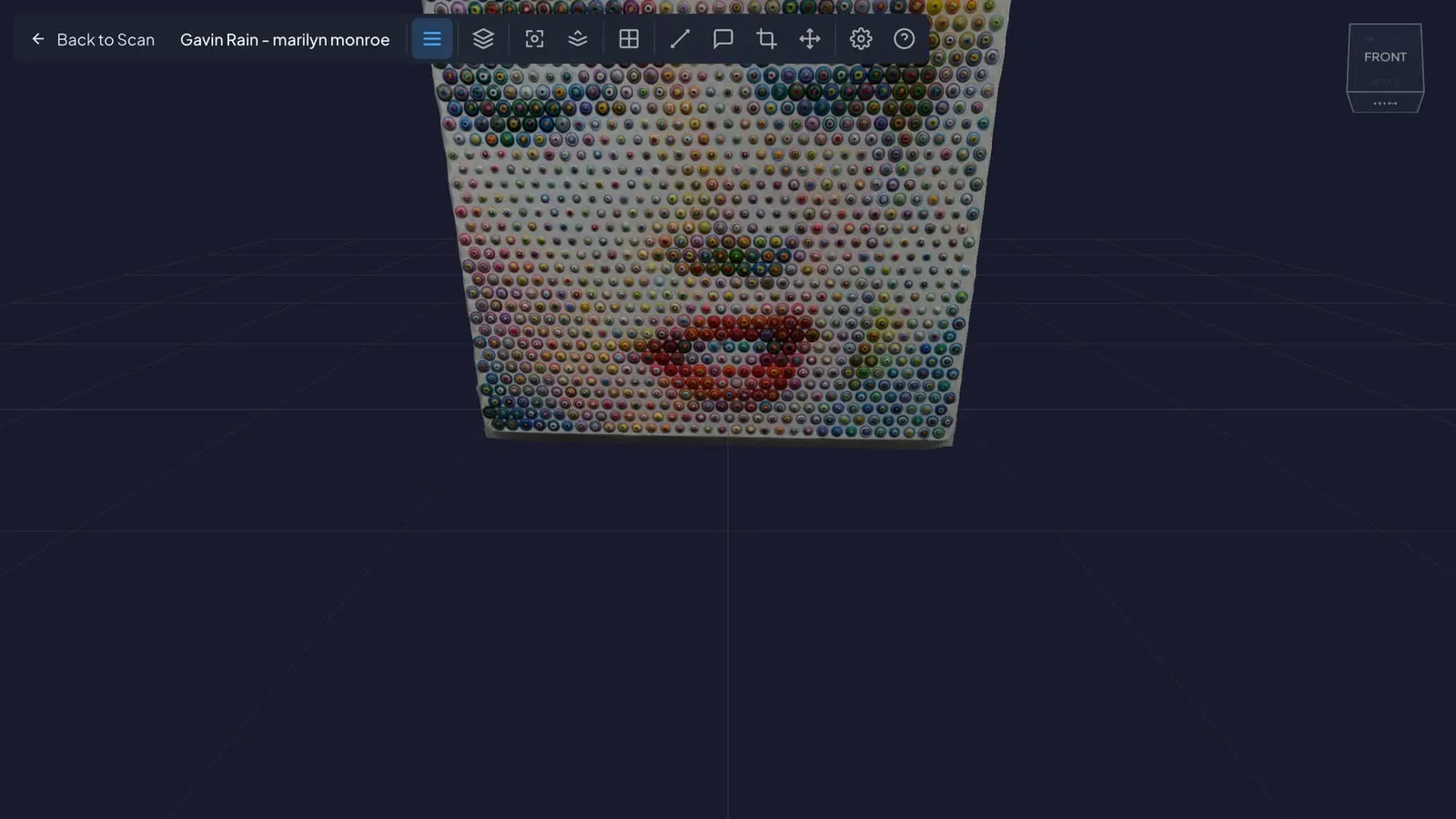
The 3D model, seen from the front
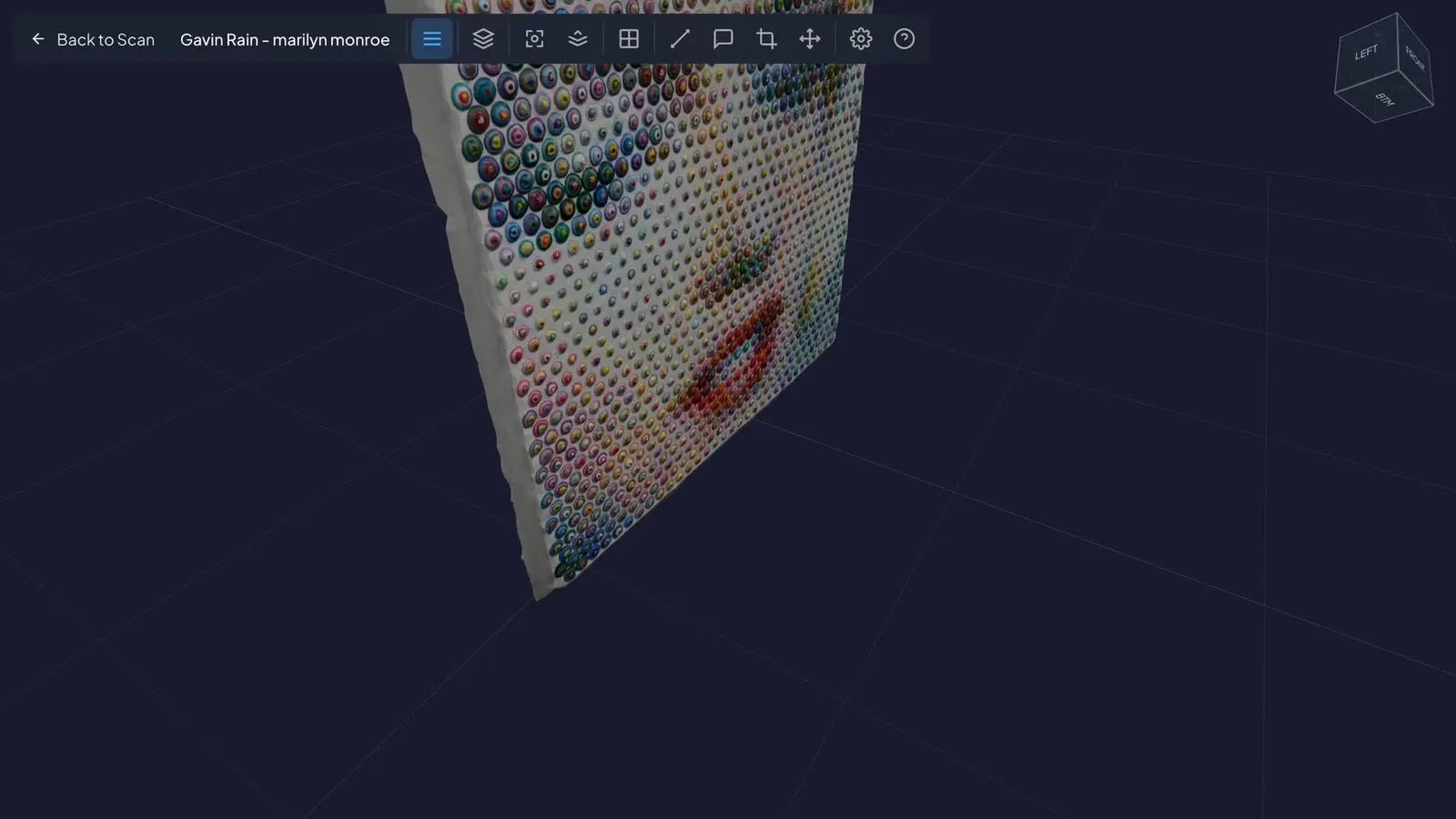
The same model from the side: the paint stands off the panel
For Condition: the Photographs, Each in Its Place
The second result is the set of photographs the model was made from. They are kept at full resolution, and each one is placed in 3D at the position the phone was in when it was taken.
The photo set for the same work holds 39 photographs at 3024 x 4032 pixels. The viewer shows the model with the camera positions around it. Select a position and the photograph taken from there opens at full resolution.
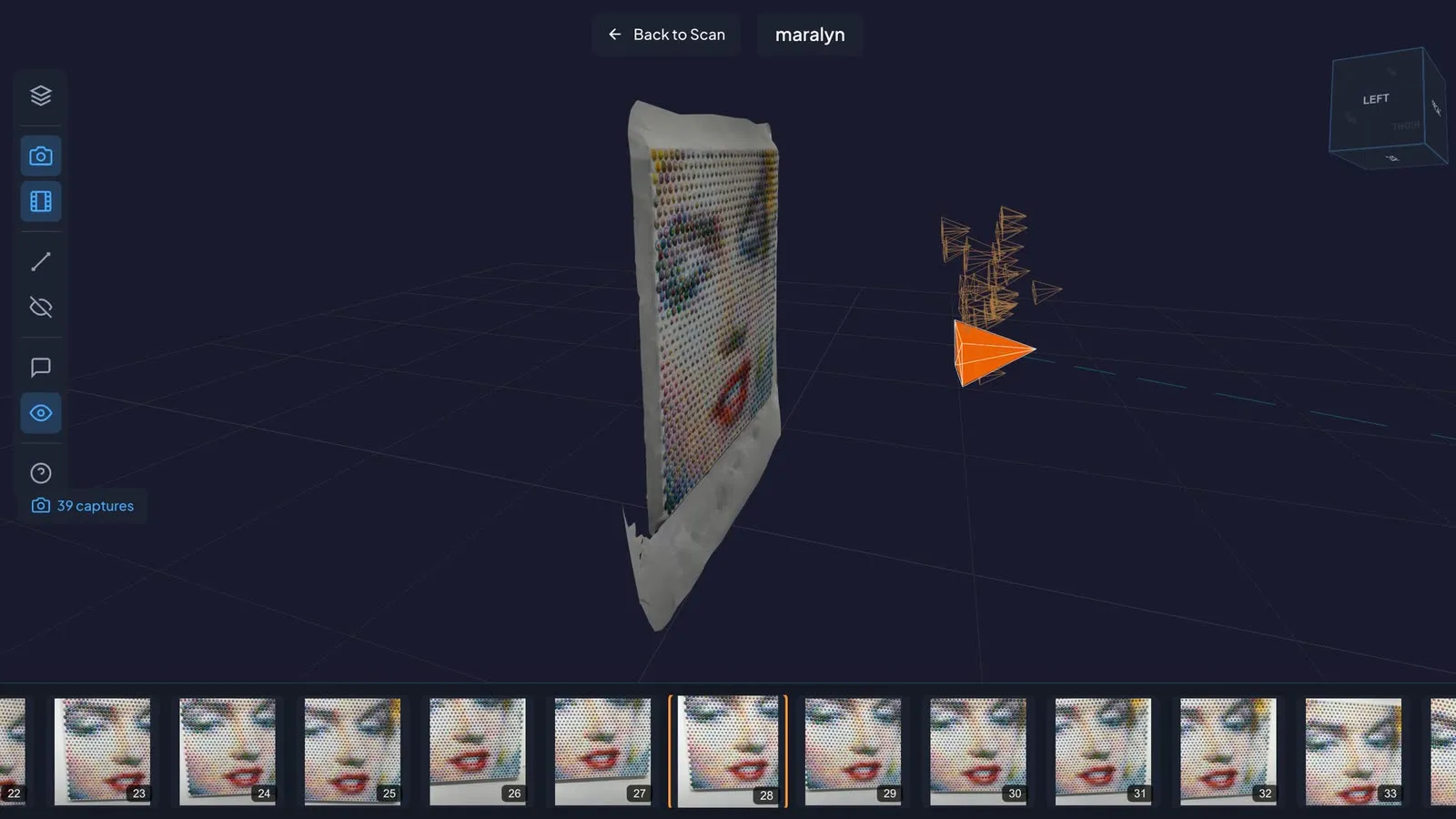
The model with its 39 camera positions
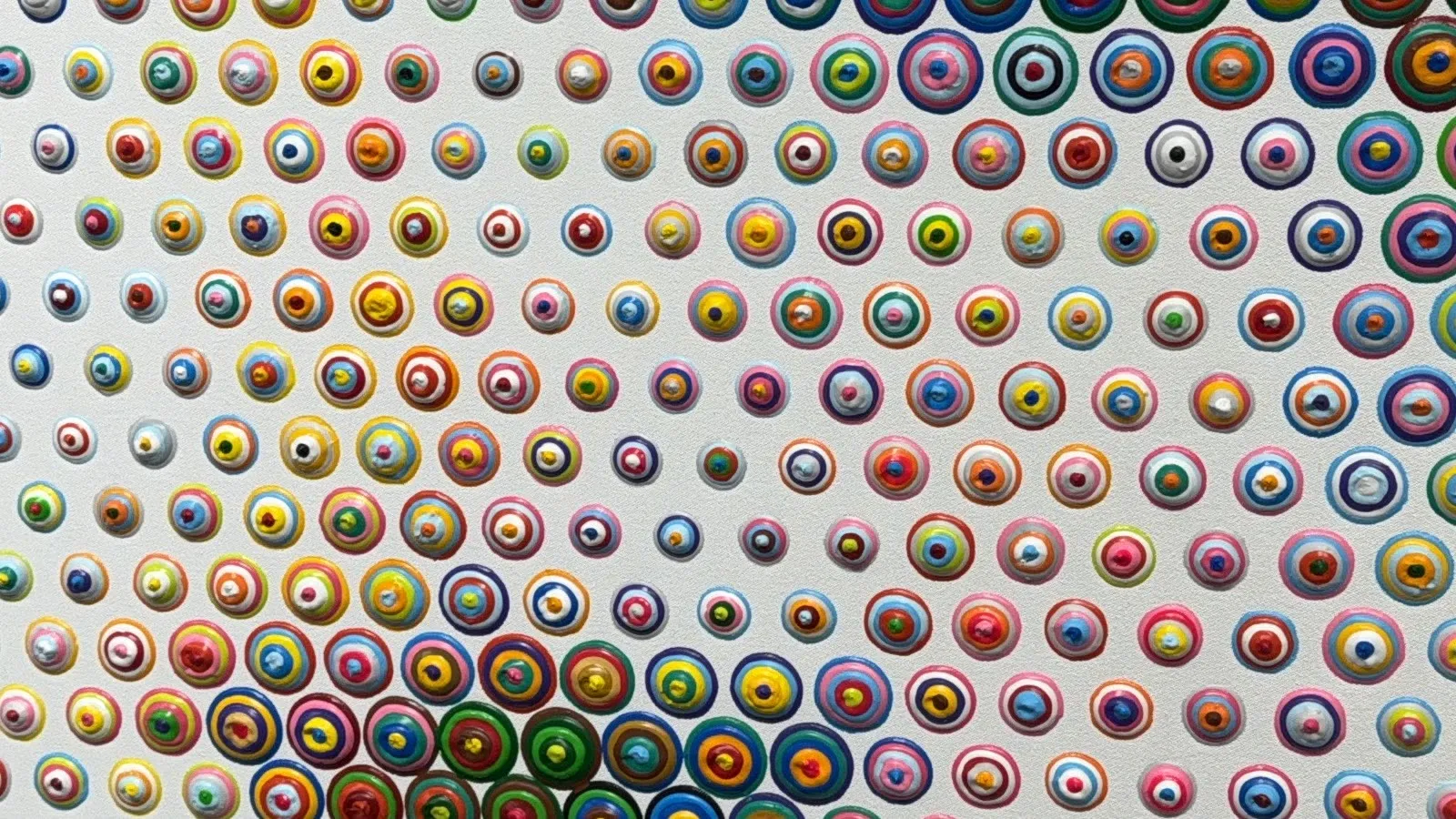
Detail of one photograph at full resolution
That is what makes it a condition record. Every part of the surface is covered by a dated, full-resolution photograph, and each photograph is tied to the part of the work it shows. Captured when a work arrives and again before it leaves, the two sets can be compared area by area.
Why a Phone
Anyone in the gallery can do it. A work that arrives on Tuesday can be on the record on Tuesday.
It keeps pace with the hang. The room scan shows the gallery on the day it was scanned. Works that arrive later are added one at a time, without scanning the room again.
Step 4: Tie Them Together
Four markers sit on the floorplan, each at the position of a work. A marker shows the work's thumbnail and offers two ways on.
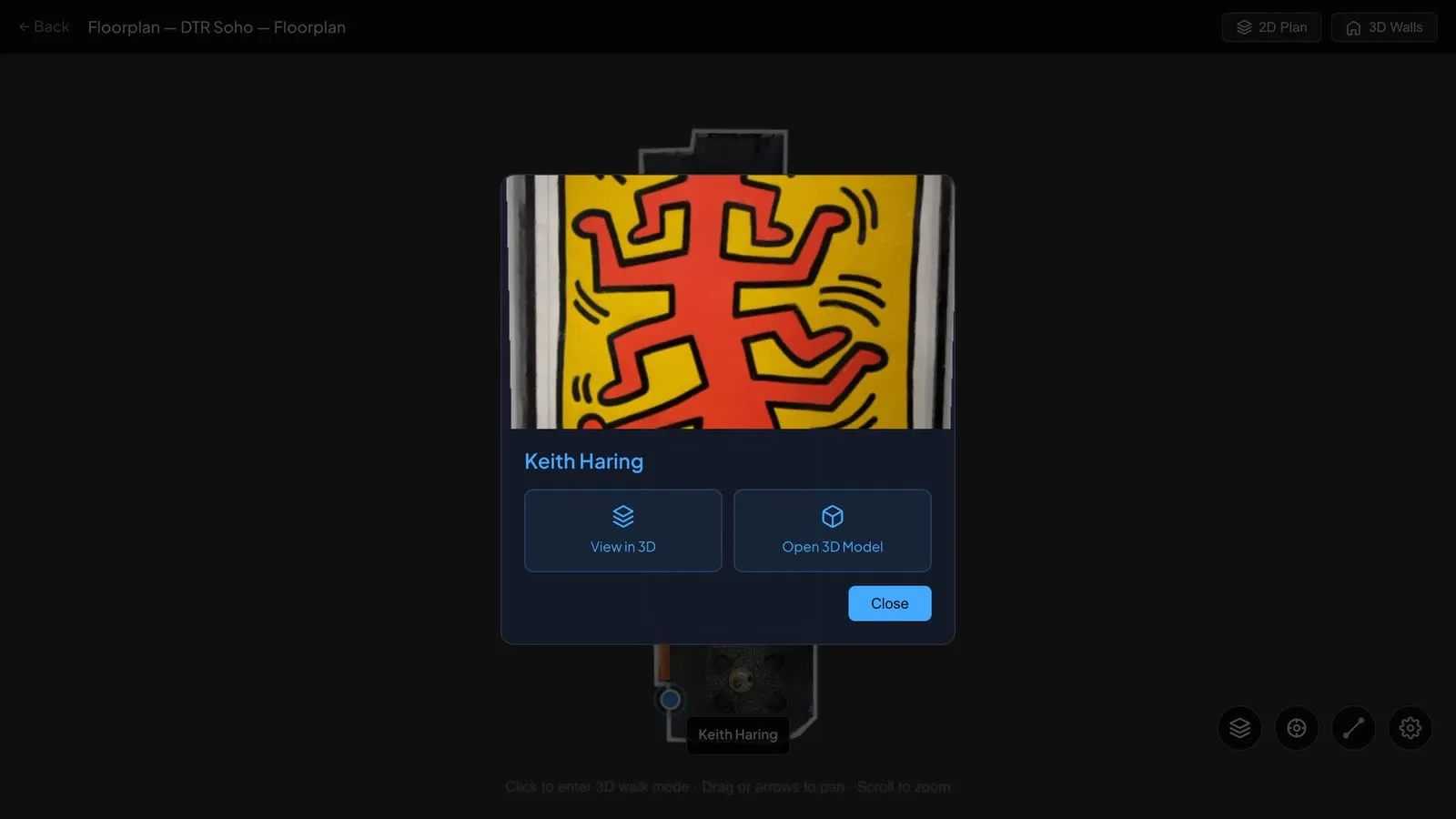
A marker's card on the floorplan
View in 3D puts you in the room, standing in front of the work where it hangs.
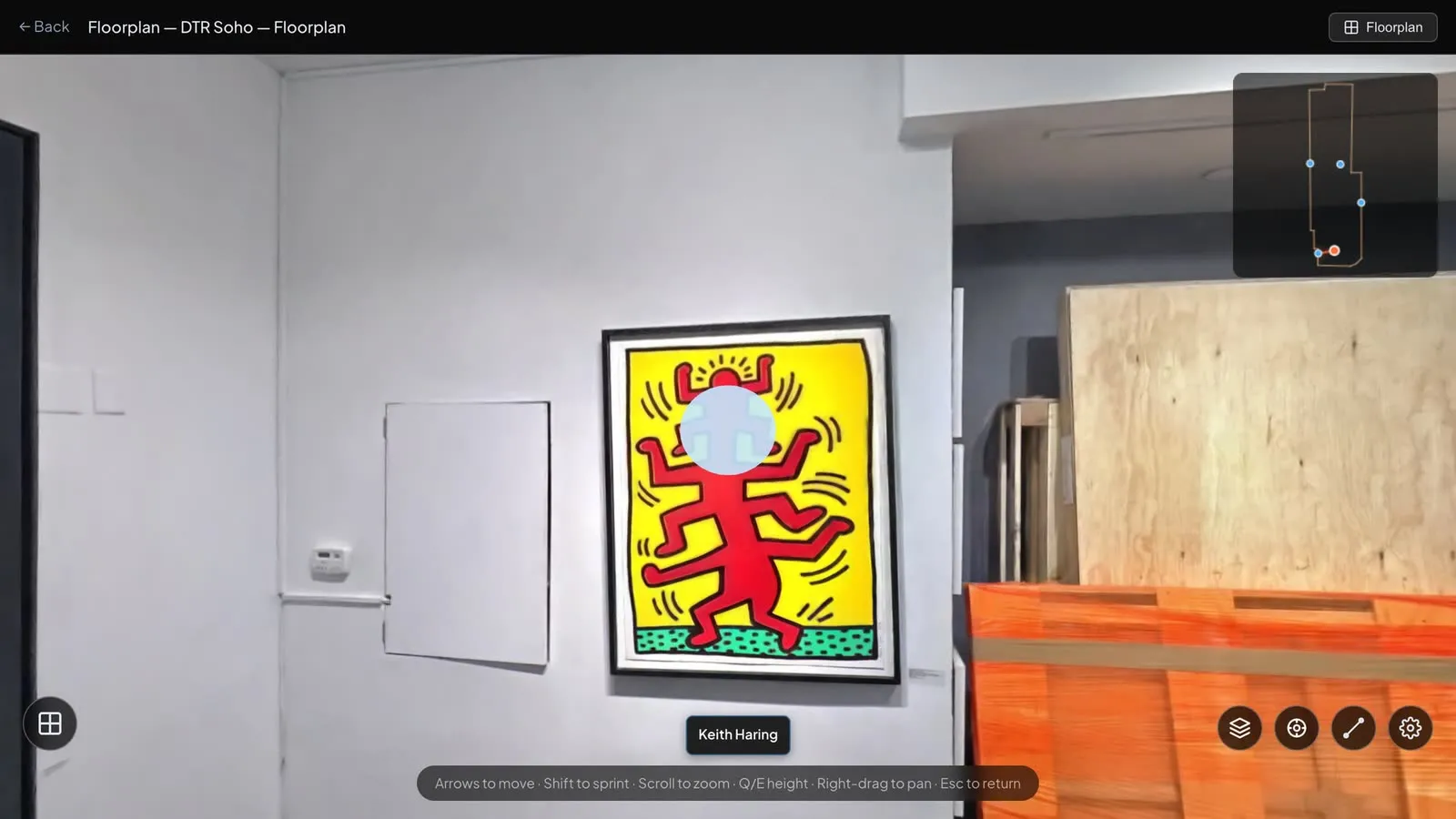
Standing in front of the work in the room scan
Open 3D Model opens the phone capture of the work itself, with a link back to the plan.
The room gives the work its context. The capture gives it its detail. Neither has to be found by searching: each is one step from the other.
Sharing
The gallery, the project and every work have their own page. A link to a single work can go to a collector. A link to the group shows everything captured so far. A link to the room lets them walk it. Any of these can be private, unlisted or public, with an optional password, and nothing has to be installed to open them.
Results
- The hang is on record. The room can be walked as it was on the day of the scan.
- A plan with dimensions. 121 square metres, drawn over the scan, with each work located on it.
- Each work can be viewed remotely. Four 3D models, all made with an iPhone in the gallery.
- Condition is documented. A set of 39 full-resolution photographs, each placed on the work it shows.
- Context and detail are linked. Four markers on the plan lead to the works, and from each work back to the room.
Where Else It Applies
- Galleries and dealers: remote viewing, exhibition archives, consignment records
- Museums and collections: object records tied to where an object is displayed or stored
- Insurance and logistics: condition before and after transport
- Interiors and retail: a space and the pieces in it, documented together
- Inspection: the same pairing of scan and phone capture, applied to assets rather than art
See how Laan Labs works with art, museums and cultural heritage.
How It Is Built
- Capture: 3D scanner for the room; iPhone for the works, uploading through a token-based API
- Frontend: SvelteKit, three.js, LCC Web SDK for splat rendering
- Backend: Firebase App Hosting, Firestore, Firebase Authentication
- Storage: Google Cloud Storage, signed URLs, ranged streaming of splat data by level of detail
- Floorplans: drawn over the scan, exported to OpenPlan3D
About This Project
The capture pipeline, the viewers and the floorplan tools are designed and built by Laan Labs. The same pairing of a scan for context and a phone for detail is used for inspection and condition records in other fields. See 3D capture pipelines for inspection and documentation.
To talk about documenting a space or a collection, contact us or email labs@laan.com.
Technologies Utilized
Gaussian Splatting, LiDAR, iPhone capture, Photogrammetry, three.js, WebGL, SvelteKit, Firebase, Google Cloud Storage
Download this article
Get the markdown source for offline reading